


In most people’s perception, kidney damage is only associated with a high-salt diet or diabetes. But the truth is, some “common foods” we eat daily are quietly attacking the kidneys day after day. These foods can clog renal tubules, trigger kidney inflammation, and even cause chemical damage to the kidneys from the inside. What’s more terrifying is that this damage progresses slowly and painlessly, and by the time obvious symptoms appear, it is often irreversible. Today, we will reveal these 10 most kidney-damaging foods to help you avoid risks in advance.
It should be noted that this inventory adopts a reverse order, gradually revealing the most kidney-damaging “number one culprit” from the 10th place.
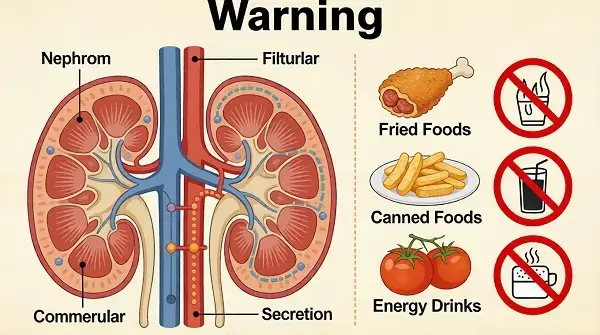
No. 10: High-Sodium Processed Foods
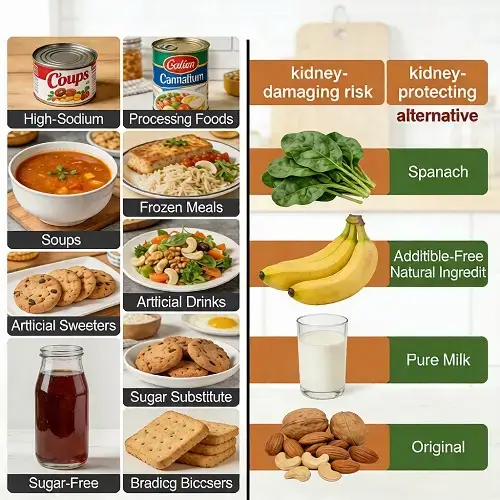
When it comes to kidney-damaging foods, high-sodium foods are often the first to come to mind, but the truth is not that “salt itself is harmful.” The real problem is that most high-sodium foods (such as canned soups, frozen meals, fast food and other processed foods) lack potassium to balance the effects of sodium. When sodium intake is excessive without the check and balance of potassium, it will become a heavy burden on the kidneys: the kidneys need to work overtime to metabolize sodium, which in turn causes sodium retention and water retention, leading to increased blood pressure. The high-pressure state will intensify the friction of microvessels in the kidneys, causing damage to microvessels and microtubules, and gradually impairing kidney function.
A misunderstanding needs to be corrected here: there is no need to be overly afraid of salt; most people actually need to supplement salt in an appropriate amount. The key lies in “balance” — either choose balanced electrolyte supplements such as euLyte, or sprinkle salt on natural foods rich in potassium, such as leafy greens and non-starchy vegetables.
No. 9: Coffee Creamer
Many people are used to mixing coffee with creamer to make the taste more mellow, but most coffee creamers on the market do not contain real cream and are non-dairy products. To simulate the taste and flavor of cream, manufacturers add a lot of chemical substances to them, such as titanium dioxide emulsifiers (used to blend fat and water), artificial colors and artificial flavors. These ingredients have been proven to damage the integrity of kidney cell membranes, leading to kidney “leakage”, and long-term use may also cause proteinuria, seriously threatening kidney health.
No. 8: Alcohol
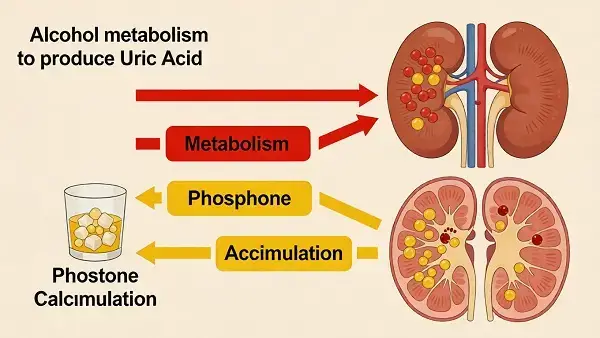
The hazards of excessive drinking are well known. For the kidneys, the damage caused by alcohol is mainly reflected in three aspects: first, it causes dehydration, reducing the filterable fluid available to the kidneys and increasing the filtration burden on the kidneys; second, it produces a lot of toxins that damage tissues throughout the body; third, it promotes the production of uric acid — uric acid is a sharp crystal with glass-like spines, which is highly corrosive, can damage kidney tissue, and may also form kidney stones.
It should be noted that the ranking here is based on the moderate consumption of pure alcohol (such as distilled spirits). If alcohol is mixed with sugar, artificial sweeteners or other chemical additives to make cocktails and other drinks, its damage to the kidneys will increase exponentially.
No. 7: Green Smoothies
This may surprise many health-conscious people — why are green smoothies, regarded as a “health benchmark”, harmful to the kidneys? The core problem is that common ingredients in smoothies, such as spinach, almonds, beets, etc., are all rich in oxalic acid. Drinking a lot of green smoothies rich in these ingredients every day may lead to excessive oxalic acid intake. Oxalic acid can form crystals, which in turn induce kidney stones.
However, oxalic acid is not an absolute “enemy”; the body’s ability to process oxalic acid determines whether it will cause harm. There are three ways to reduce the hazards of oxalic acid: first, rely on Oxalobacter formigenes in the intestines to decompose oxalic acid and reduce absorption; second, combine oxalic acid with minerals such as calcium and magnesium so that it cannot be absorbed and is excreted in the feces; third, use citric acid (citrate) in lemons to prevent oxalic acid from combining with calcium in the blood to form crystals. However, conditions such as insufficient gastric acid, mineral deficiency, intestinal flora imbalance, intestinal leakage, dehydration or constipation will reduce the body’s ability to process oxalic acid and increase the risk of kidney damage.
No. 6: Artificial Sweeteners
Three artificial sweeteners — aspartame, sucralose, and acesulfame potassium — are widely present in various processed foods and are highly targeted in damaging the kidneys: aspartame decomposes into methanol (wood alcohol, which can cause blindness in excessive amounts), and then decomposes into formaldehyde and formic acid used to preserve biological specimens; sucralose changes renal tubule function, leading to impairment of the kidneys’ filtration and reabsorption functions; acesulfame potassium accumulates in kidney tissue, causing mitochondrial damage and oxidative stress. More seriously, all three sweeteners are directly toxic to kidney tissue.
No. 5: Processed Meats
Many people mistakenly believe that “protein damages the kidneys”, which is actually a misunderstanding. Although the nitrogenous waste produced by protein metabolism needs to be filtered by the kidneys, the protein in natural meats (such as beef) will not burden healthy kidneys as long as it is not excessively consumed (for example, eating only lean protein with a daily intake of 300-400 grams in extreme cases). What really damages the kidneys are the additional ingredients added to processed meats — phosphate preservatives, nitrates, nitrites, and advanced glycation end product complexes. These ingredients will increase the acid load of the kidneys, accelerate kidney calcification and scarring, and cause multiple stimuli to the kidneys.
It should be supplemented that kidney repair actually requires protein. Only when there are existing kidney problems, dehydration or metabolic diseases, it is necessary to appropriately reduce protein intake.
No. 4: High-Phosphate Foods
Phosphate itself is not a harmful substance; it and calcium together form the main component of bones. But the phosphate preservatives added to processed foods (such as processed cheese, soda water, frozen meals, fast food, etc.) are inorganic phosphates, which are very different from phosphates in natural foods: the absorption rate of natural phosphates is only 30%-40%, while the absorption rate of artificially added inorganic phosphates is as high as 90%.
The metabolic balance formed by human evolution determines that we can only efficiently absorb a small amount of phosphate. Excessively absorbed phosphate will accumulate in the kidneys, arteries and bones: in the bones, it will disrupt the calcium-phosphorus balance; in soft tissues such as the kidneys, it will cause renal osteodystrophy — that is, the inside of the kidneys gradually calcifies and hardens, and eventually loses function.
No. 3: Non-Steroidal Anti-Inflammatory Drugs (NSAIDs)
Although it is not a food, non-steroidal anti-inflammatory drugs such as ibuprofen and naproxen must be included in this list because of their wide use and significant damage to the kidneys. Such drugs exert anti-inflammatory and analgesic effects by blocking the synthesis of prostaglandins, and at the same time reduce the blood supply to the kidneys.
Although the kidneys only account for 1% of body weight, they receive 20% of the total cardiac output. Sufficient blood and oxygen are the basis for their efficient work. After the blood supply is reduced, the kidneys need to complete the same amount of toxin filtration work under hypoxic conditions, which will cause tissue stress, increased toxin concentration, and ultimately lead to tissue damage and cell death. Long-term and frequent use will cause permanent loss of kidney tissue and irreversible decline in filtration function.
No. 2: Seed Oils (Vegetable Oils)
The core reason why mass-produced vegetable oils sold in supermarkets, such as corn oil, rapeseed oil, and soybean oil, damage the kidneys is not the raw materials themselves, but their extremely harsh processing process. The high temperature, high pressure, and solvents such as acetone used in the production process will cause oil oxidation and produce a harmful substance called aldehydes.
Aldehyde substances are directly toxic to kidney cells, damage the smallest functional units of the kidneys (glomeruli), cause renal tubule scarring, and long-term intake will also damage the filtration membrane of the kidneys, causing comprehensive and serious damage to the kidneys.
No. 1: Sugar and Sugar-Containing Products
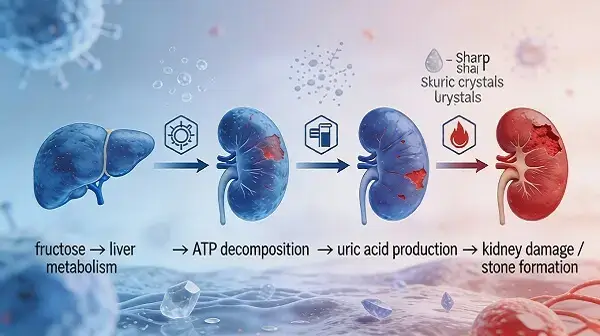
Whether it is white sugar (sucrose), high-fructose corn syrup, or agave syrup (with a fructose content of up to 80%) and honey (high in fructose), which are regarded as “healthy choices” by some people, their damage to the kidneys ranks first. The harm of sugar lies not only in raising blood sugar and causing insulin resistance, but also in the fructose component in it, which is more fatal.
Unlike glucose, fructose can only be metabolized in the liver. When the liver metabolizes fructose, it consumes a lot of energy currency ATP (adenosine triphosphate), leading to ATP decomposition. The core component of ATP, adenosine, contains nitrogen, which is converted into uric acid after decomposition — it is this sharp crystal with sharp edges and corners that can severely corrode kidney tissue, form kidney stones, and eventually lead to kidney scarring and permanent damage. Many people mistakenly believe that uric acid is only related to protein, but ignore that fructose is one of the fastest and most important sources of uric acid production.
The kidneys are the “purification core” of the human body, and their health is directly related to the overall metabolic balance. Avoiding the above kidney-damaging foods, choosing natural and unprocessed ingredients, maintaining a balanced diet and adequate water intake can build a solid protective barrier for the kidneys. If you want to have a deeper understanding of the body’s metabolic mechanism and master healthy management skills, you may wish to continue paying attention to relevant popular science content, so that scientific diet can become the first line of defense to protect health.
Summary
This article reveals 10 common kidney-damaging foods in reverse order, focusing on their harm mechanisms and misunderstandings. The core insights are as follows: First, the main hazards of these foods lie in inducing dehydration, producing toxic substances (such as uric acid, aldehydes), disrupting metabolic balance (such as calcium-phosphorus imbalance), and directly damaging kidney tissues (such as glomeruli, renal tubules). Among them, sugar and sugar-containing products (especially fructose) are the top culprits, followed by seed oils, NSAIDs, high-phosphate foods, etc. Second, many misunderstandings need to be corrected: salt itself is not harmful, and the key is to balance it with potassium; protein in natural meat does not burden healthy kidneys, and the real danger comes from additives in processed meat. Third, the main protective measures include avoiding processed foods with excessive additives (artificial sweeteners, phosphate preservatives), choosing natural ingredients, maintaining a balanced diet (supplementing potassium appropriately), and ensuring adequate water intake. Protecting kidney health requires staying away from these hidden hazards and establishing scientific eating habits.



Yes
jxjfkfdjhdj
…